
Most exterior paint problems on Fort Collins homes do not start with cheap paint. They start with water, sun, and bad timing. That mix is what turns small exterior paint problems into big ones. When exterior paint peeling shows up, it is usually a clue. Moisture got somewhere it should not be, or the coat went on in the wrong conditions. The good part is that these causes are known, predictable, and fixable. You do not have to be a paint chemist to spot them. You just need a crew that handles them the right way.
This post breaks down what actually drives exterior paint peeling here. The causes range from snowmelt and freeze-thaw to the strong Colorado sun. It also covers the prep and timing steps that keep a new coat stuck for years. By the end, you will know what to look for and what to ask a painter. You will also see how Elements Painting Inc. approaches the work on local homes.
Key Takeaways:

What Exterior Paint Peeling Is Really Telling You
Paint sticks to your house by forming a thin, flexible film that bonds to the surface. When that bond breaks, the paint lifts, curls, and flakes off. Bubbling and blistering are close cousins. They happen when something pushes the film away from the wall from underneath.
That something is almost always water. Researchers at the American Coatings Association make this point clearly. Moisture trapped under a coating can cause blistering even after the paint has dried. So when you see exterior paint peeling, the paint is not the failure. It is the messenger. It shows you where water is getting in. Or it shows where the surface was never ready for a coat.
This matters because painting over the symptom does nothing. A new coat over a wet or poorly prepped wall peels right back off. That can happen within a season or two. The cause has to be found and fixed first.
The Fort Collins Weather Problem
Fort Collins sits in a semi-arid, high-altitude climate. The area gets only about 16 inches of rain a year. It also sees roughly 50 inches of snow, which tends to melt within a few days. On top of that, the sun shines most of the year. Daily temperatures can swing widely between afternoon and night.
Each of those facts has a direct effect on paint. Fast snowmelt sends water into any open seam, crack, or bare patch of wood. That water freezes overnight and thaws the next day. As it expands and contracts, it pries the paint film loose a little more each cycle. This freeze-thaw action is a common driver of exterior paint peeling on older siding and trim.
The strong Colorado sun adds a second kind of wear. Steady ultraviolet light breaks down the paint film and the caulk around windows and joints. As caulk dries out and cracks, it opens new paths for water to slip behind the siding. The dry air fools a lot of people into thinking moisture is not a concern here. The truth is simpler. Snowmelt, sprinklers, and big temperature swings give water plenty of chances to get where it does not belong. These are the exterior paint problems the local climate creates year after year.
Why Timing Causes Exterior Paint Problems
Weather does not only damage old paint. It also decides whether new paint sticks at all. This is where a lot of exterior paint problems quietly begin.
Water-based paint needs warmth and a dry surface to cure into a strong film. Paint makers such as Sherwin-Williams explain the limit. Latex paint will not form a proper film on a cold or damp surface, or below about 50 degrees. The same goes for painting too close to the dew point, when overnight moisture settles on the wall.
In Fort Collins, spring and fall are tricky for this reason. A warm afternoon can tempt anyone into painting. But if the temperature falls near freezing that night, the coat may never cure. Painting right after snow or rain has the same effect. The wall looks dry on the outside. Inside, the wood is still damp, and that water has nowhere to go but back through the paint.
Prep Is What Makes Paint Stick
If weather sets the stage, prep decides the outcome. Skipping prep is the most common reason a paint job fails early. It is also fully within a painter’s control.
Good prep on a local home usually means a few clear steps:
Fixing the water source belongs on that list too. Clean gutters, good grading, and siding set a few inches above the soil all keep water away. Handle those first, and the paint has a real chance to last.
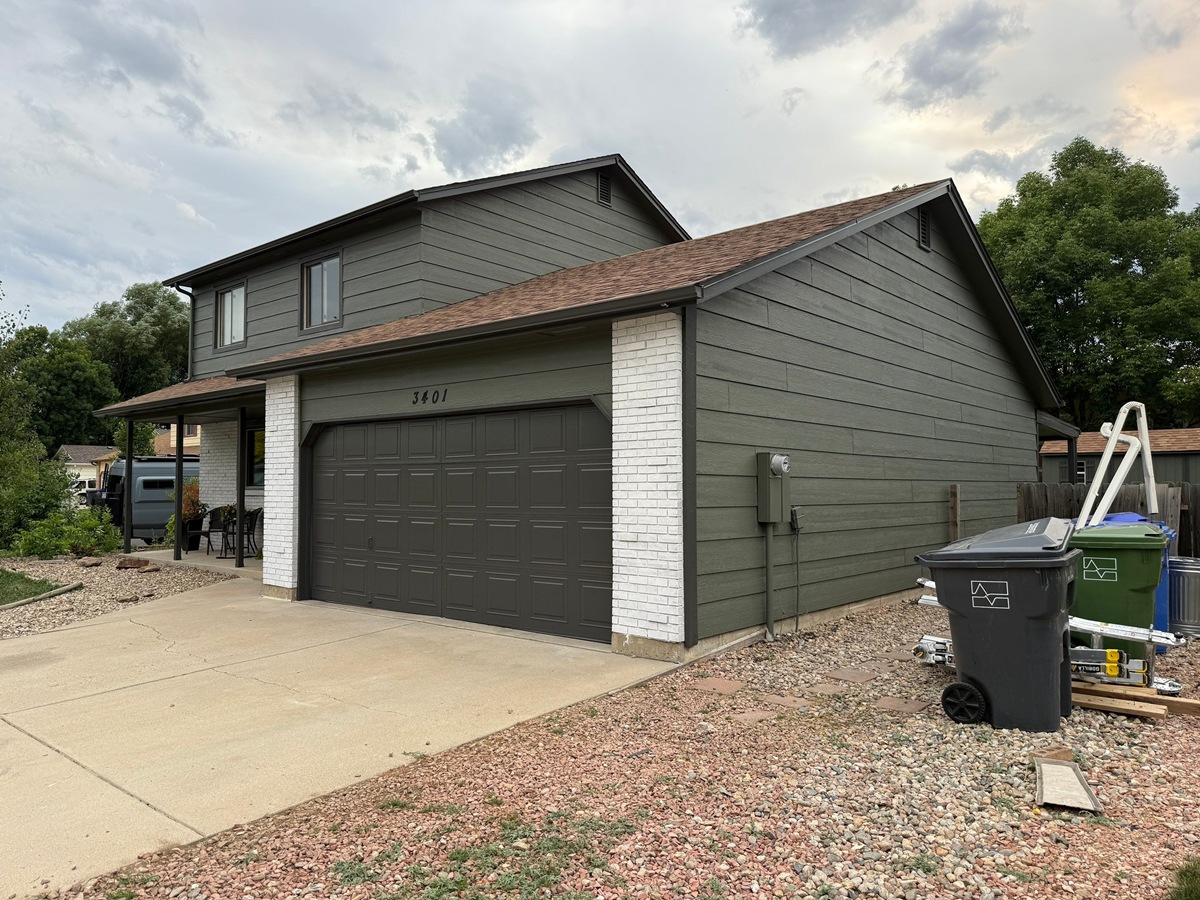
How Elements Painting Inc. Approaches Exterior Paint Peeling
Plenty of homeowners have paid for a paint job and watched it peel. They were left unsure whether the painter or the paint was at fault. That uncertainty is fair. Quality is hard to judge when the work happens fast. Most of it is hidden under the finish.
Elements Painting Inc. works to remove that guesswork on exterior paint peeling jobs. The crew starts by looking for the water source. They also check the surface for moisture and temperature before any paint comes out. Prep is matched to what the siding actually needs, not rushed to fit a calendar. Painting happens inside the right weather window for the product being used. The crew also explains the reasons behind each step. That way you can see why the work holds up, instead of taking it on faith.
There are no vague promises here. You get clear criteria instead. The cause is found, the surface is sound and dry, and the weather is right before the first coat goes on.
A Simple Plan for Your Home
Getting a lasting result does not have to feel confusing. Here is what working with Elements Painting Inc. looks like:
Each step lowers the odds of a repeat failure. Each step also puts you in control of the decision.
Talk to Elements Painting Inc.
A peeling house is not a life sentence. It is not proof that paint never lasts in Colorado. It is a sign that the cause was missed last time. Find the cause, prep the surface, and paint in the right conditions. A coat can then hold for years on a Fort Collins home.
If you have questions about exterior paint peeling on your siding, Elements Painting Inc. will take a look. They will walk you through what they find, with no pressure to book on the spot. Call 719-824-4980 to set up an exterior walkthrough and get a straight answer about what your home actually needs.