You are about to spend real money on your kitchen, so one question is fair to ask: are painted cabinets durable enough for the steam, splashes, and heat a kitchen sees each day? It is smart to wonder this before you commit. Pasta water boils over. The sink stays busy. The dishwasher puffs out warm, damp air. All of that moisture goes somewhere. So how long do painted kitchen cabinets last in a room like that?
This post gives you a straight answer, in plain words, with no sales spin. You will see what humidity does to paint, what makes a finish hold up, and the few questions worth asking before you hire.
Key Takeaways:
What a Humid Kitchen Does to Paint
Your kitchen takes on more water than almost any room. Cooking adds steam. The sink splashes. The dishwasher lets out heat and damp air each time it runs. Moisture pools most under the sink and near the dishwasher, where leaks can hide. The EPA notes that cooking and running the dishwasher both add moisture to the air. It suggests you keep indoor humidity under 60 percent to protect your home. You can read more on its page about keeping indoor moisture in check.
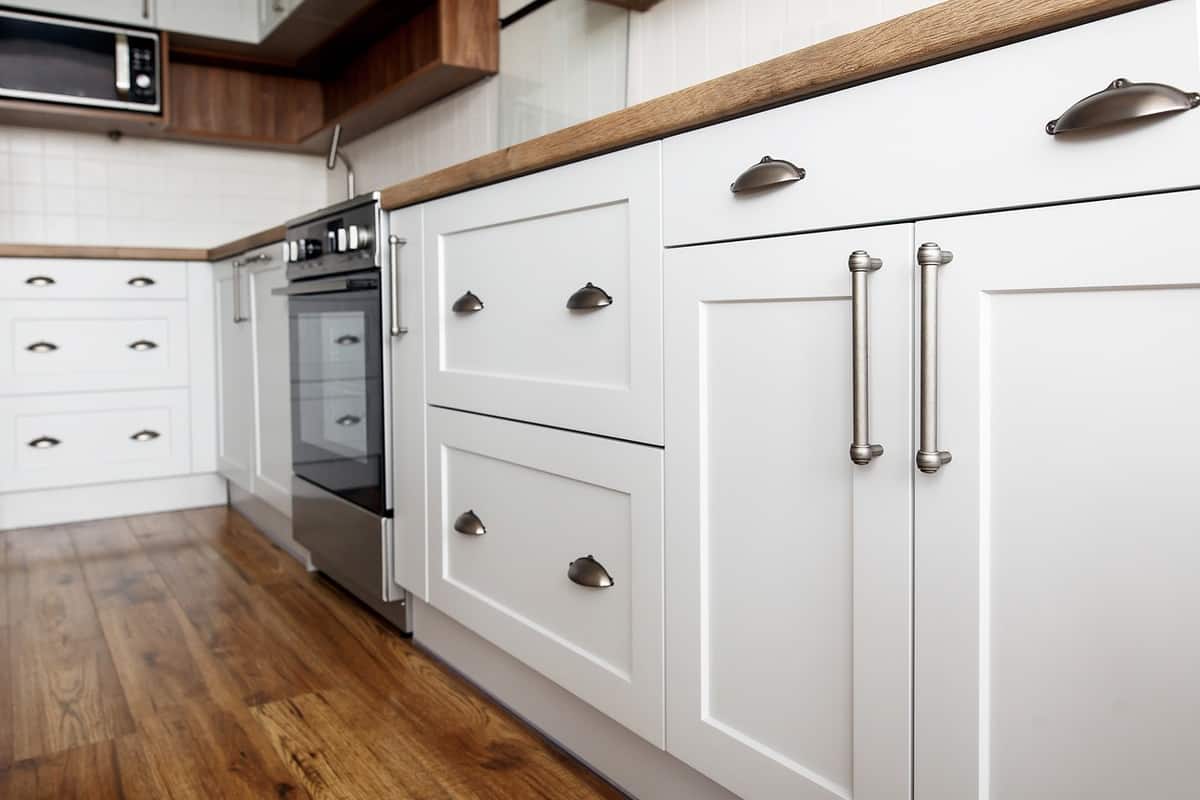
Wood reacts to all that damp air. It swells a little when the air is wet. It shrinks back when the air dries. That small movement is normal. But it tugs at whatever sits on top of the wood. A weak finish cannot move with it. Over time, that finish can crack or lift near the sink and stove, where it gets the most moisture. A finish that was prepped and applied the right way grips the wood and flexes with it. That gap is what good cabinet painting is built to close.
How Long Do Painted Kitchen Cabinets Last?
Here is the honest answer. Painted by a careful pro, kitchen cabinets can look great for ten to fifteen years. Many last longer with light care. Painted in a rush, with little prep, they may show wear in a year or two. So the room is not the real driver. The work is.
The paint itself is built for this. Benjamin Moore notes that its waterborne alkyd cabinet enamel dries to a hard, washable finish. It is made for cabinets, trim, and other surfaces you touch and clean often. Satin and semi gloss are common picks for kitchens, since they wipe down with ease. You can see its notes on this cabinet enamel on its own site.
There is a catch worth knowing. That finish does not reach full hardness the day it goes on. Benjamin Moore says it can take up to about thirty days to fully harden. It also says higher humidity can stretch that time out. A good crew plans for this. They handle the doors with care. They tell you how to treat them for the first few weeks. Putting cabinets back to hard use too soon is a quick way to leave marks in a fresh finish.
What Makes a Painted Finish Hold Up
Three things decide whether your cabinets last. None of them is the brand on the can.
First is prep. Cabinets pick up grease and cooking film, even when they look clean. All of it has to come off. Then the wood gets sanded, so the new coat has something to grab. Skip this, and paint peels later. Prep is the step that gets cut most.
Second is primer. A bonding primer makes a strong base between the wood and the color coats. On slick or bare wood, primer is what keeps it all locked down.
Third is the enamel itself. It should go on in thin, even coats, with dry time between them. Thin coats cure harder and smoother than thick ones. This is where spraying often beats a brush. It lays down a cleaner, more even surface.
Put all three together, and you get a finish that wipes clean and holds its color. Leave one out, and the damp air in your kitchen will find the weak spot.
Why Some Painted Cabinets Peel
You may have seen kitchens where the paint near the sink looks rough. Or a cabinet edge that has started to lift. It helps to know why that happens, so you can steer clear of it.
Most of the time, it is not the humidity alone. It is humidity plus a shortcut. Maybe the cabinets were painted over grease. Maybe there was no primer. Maybe cheap paint went on thick and never fully cured. Damp kitchen air then works on that weak spot, day after day, until the finish gives.
The fix is not a magic product. It is care and time. When prep is done right, and the finish is allowed to cure, that same damp air has nothing to grab. The paint stays smooth and tight, even right by the sink. Solid kitchen cabinet refinishing lives or dies on that care.
Sheen and Upkeep: Small Things That Help
A few simple habits stretch the life of any painted finish.
Sheen helps. Satin and semi gloss wipe clean more easily than flat paint, so many pros use them on kitchen cabinets. They shrug off splatters near the stove and sink.
Airflow helps too. Run the range hood while you cook. Crack a window when the kitchen gets steamy. The EPA also points to kitchen fans as a simple way to move damp air out.
Cleaning helps most. Wipe spills and grease with a soft, damp cloth. Skip harsh scrubbers. A gentle wipe now and then keeps the finish smooth and the color true for years.
A Simple Plan for Cabinets That Last
You do not have to guess. Here is a simple plan to use when you compare painters:
Ready for Cabinets That Can Take the Heat?
Your kitchen works hard. Your cabinets should keep up with it. The right prep, the right primer, and real cure time can give you painted cabinets that stay smooth and bright for years, even with steam, splashes, and a busy sink.
At Elements Painting Inc., that careful process is how we treat every kitchen. We will look at your cabinets, talk through your prep and finish choices, and hand you a clear, written quote. No pressure, and no vague answers. If you have been weighing professional cabinet painting against all new cabinets, a short talk can save you money and a lot of second guessing.
Call Elements Painting Inc. at 719-824-4980 to set up a free estimate at your home. Bring your questions about humidity, prep, and cure time. You will get straight answers and a finish made to last.